Cold plunge tub sizing involves several measurements that should never be collapsed into one headline number. You need the usable interior, the external footprint, the installation envelope, the packaged size, and the documented working fill level. Gallon capacity cannot replace any of them. Build a dimension sheet before comparing products, and leave unknown measurements blank until the seller supplies a reliable drawing or answer.
Separate inside and outside dimensions
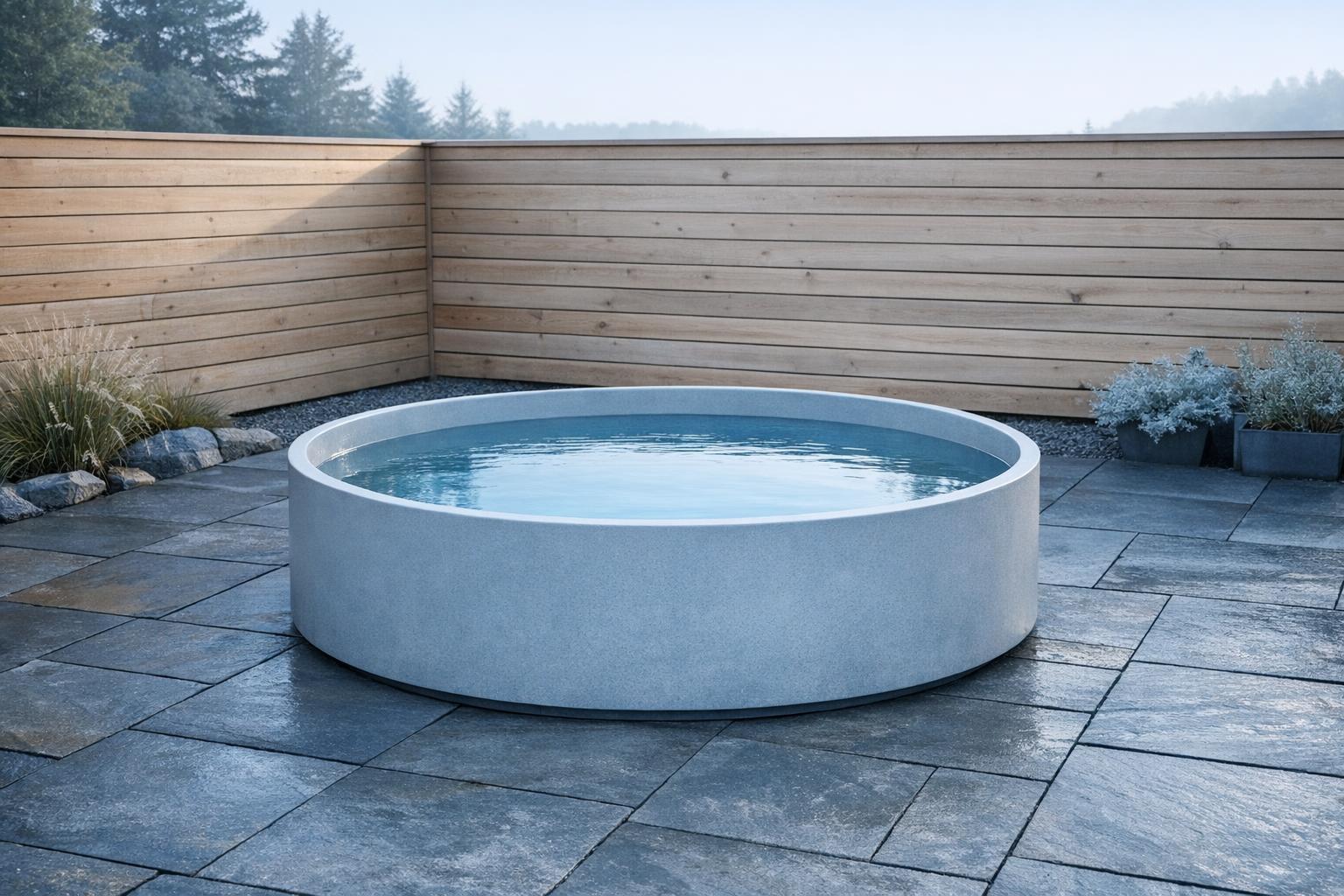
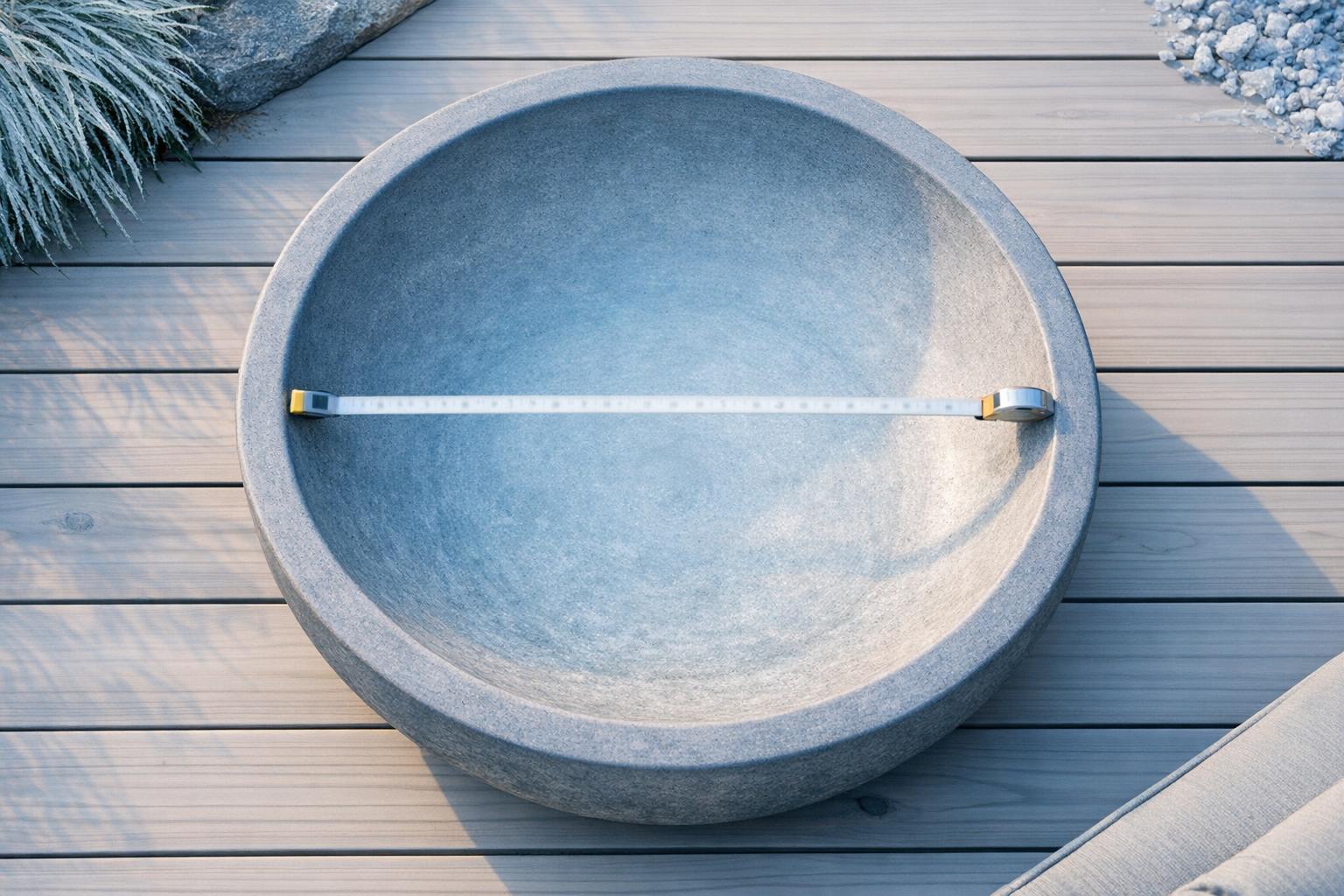
Record internal length, width, and depth where those dimensions apply. For a round vessel, ask whether the stated diameter refers to the opening, outside wall, or usable interior. For a tapered tub, request dimensions near both the base and opening. Seats, sloped backs, rounded corners, and broad rims can affect how the interior is used without being obvious in a distant product photograph.
Record the external dimensions in a separate column. Do not subtract a guessed wall thickness to manufacture an internal measurement. Inflatable walls, insulation, and equipment enclosures vary, so the answer should come from documentation. If fit is important and the drawing is incomplete, ask for additional dimensions before ordering. A return process can be much more involved after a large vessel has been delivered and unpacked.
Distinguish capacity from working fill
A listed capacity may describe the vessel rather than the water level used during normal operation. Ask the manufacturer what the number represents and follow the documented fill instruction. The Plunge Air and Pop-Up guides specify different distances below their rims. That provides a concrete reason not to infer a universal fill line from tubs that look superficially similar. These distances are equipment instructions, not bathing recommendations. [5] [6]
Allow for displacement according to the model's guidance rather than filling to the brim before someone enters. Do not publish an exact usable volume calculated from external dimensions: walls, curves, seats, and the actual fill level can invalidate it. When budgeting water or assessing support, use the manufacturer's documented operating information and appropriate professional advice. Label an estimate as an estimate if a precise volume has not been supplied.

Add the space needed around the vessel
Draw the footprint on the intended surface with removable tape. Then add the access path, entry arrangement, lid storage, drain access, and room to clean the sides. Open nearby doors and gates during the exercise. A tub that fits between two walls may still be poorly placed if the drain or an inspection panel cannot be reached. Treat access as part of sizing, not an optional luxury.
For chilled equipment, consult the model's ventilation and service diagram. The Evolve Standard manual reserves access around the chiller for ventilation and filter changes, and the All-In guide specifies different clearances on different sides. Do not reduce those spaces to make a drawing fit. Our location guide covers the support and water-handling checks that accompany this larger installation envelope. [1] [2]
Measure the delivery route as carefully as the site
Request the packaged dimensions and clarify the delivery service. A listing's assembled width does not tell you whether the shipping crate will pass a gate or whether the delivery team will carry the item to the final location. Measure pinch points, turning areas, steps, and overhead restrictions. Discuss handling requirements with the supplier instead of assuming the tub can be tipped or lifted in any convenient orientation.
If the vessel can be unpacked before passing a restricted point, confirm that this is practical and permitted. Plan where packaging will go and preserve what the seller requires for a return. Portable designs may offer a smaller delivery package, but they still need full assembly space. Our portable versus rigid comparison explains how delivery access and repeated portability differ.
Check support separately from fit
A floor plan shows whether equipment occupies the available area; it does not prove that the supporting structure can carry it. Gather the vessel's empty weight, working water information, equipment weight, and intended loading details for the professional assessing the location. Be especially cautious about raised decks, balconies, and floors whose construction is unknown. Do not treat an attractive installation photograph as structural evidence.
Plunge's setup documentation requires solid, level or flat, waterproof surfaces for the relevant systems. That is a minimum description of the site, not a load certificate for your property. Avoid unsupported numerical load rules or improvised reinforcement instructions. If the seller provides a stated loaded weight, confirm what it includes. Structural suitability and waterproofing are related planning questions but need separate answers. [1] [2]
Build a comparison sheet that exposes missing data
Use one row per candidate and columns for internal dimensions, opening size, external dimensions, required clearances, working fill instruction, empty weight, packaged dimensions, and drain position. Add the source of each value beside it. This prevents a seller's shipping dimension from silently becoming another seller's interior dimension in your comparison. Mark unavailable measurements as unknown rather than treating them as equivalent.
Finally, assess the intended users' access needs without promising comfort from numbers alone. If an authorized showroom demonstration or detailed dimensioned drawing is available, it may resolve questions that a generic lifestyle photo cannot. Return to the buying guide only after the shortlisted tubs pass the sizing checks. A smaller documented fit is more useful than a larger headline capacity attached to an installation you cannot accommodate.
Sources and further reading
- Manual and Setup Guide for the Plunge Evolve Standard Chiller
Do not use an extension cord with your Evolve Standard Chiller.
- Manual and Setup Guide for the Residential Plunge All-In
Place the Plunge on a solid, level, waterproof surface.
- Manual and Setup Guide for the Plunge Air Tub
Clear the area where you intend to place the Plunge of debris.
- Manual and Setup Guide for the Plunge Pop-Up Tub
The tub is 34 inches in diameter at the top ring.