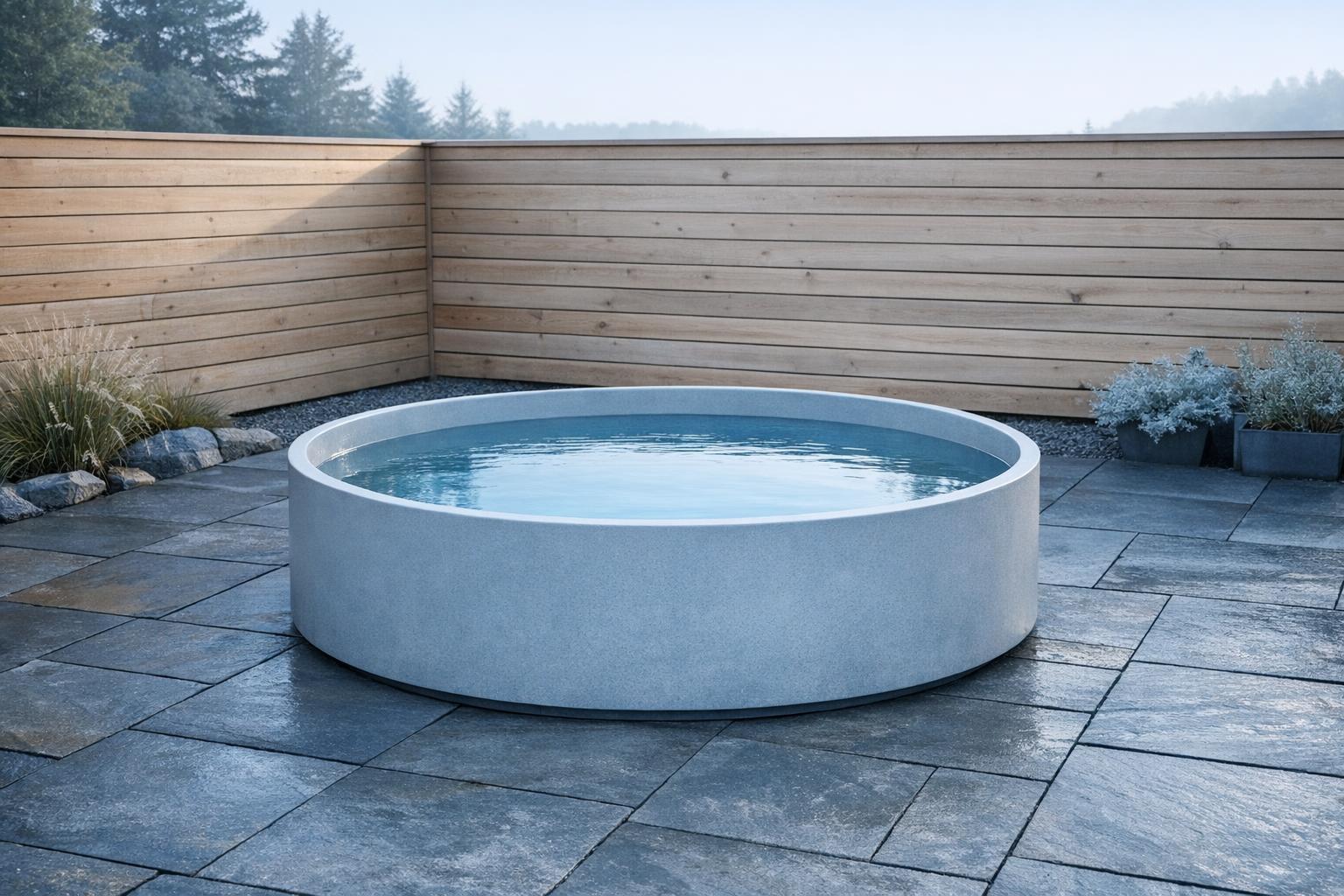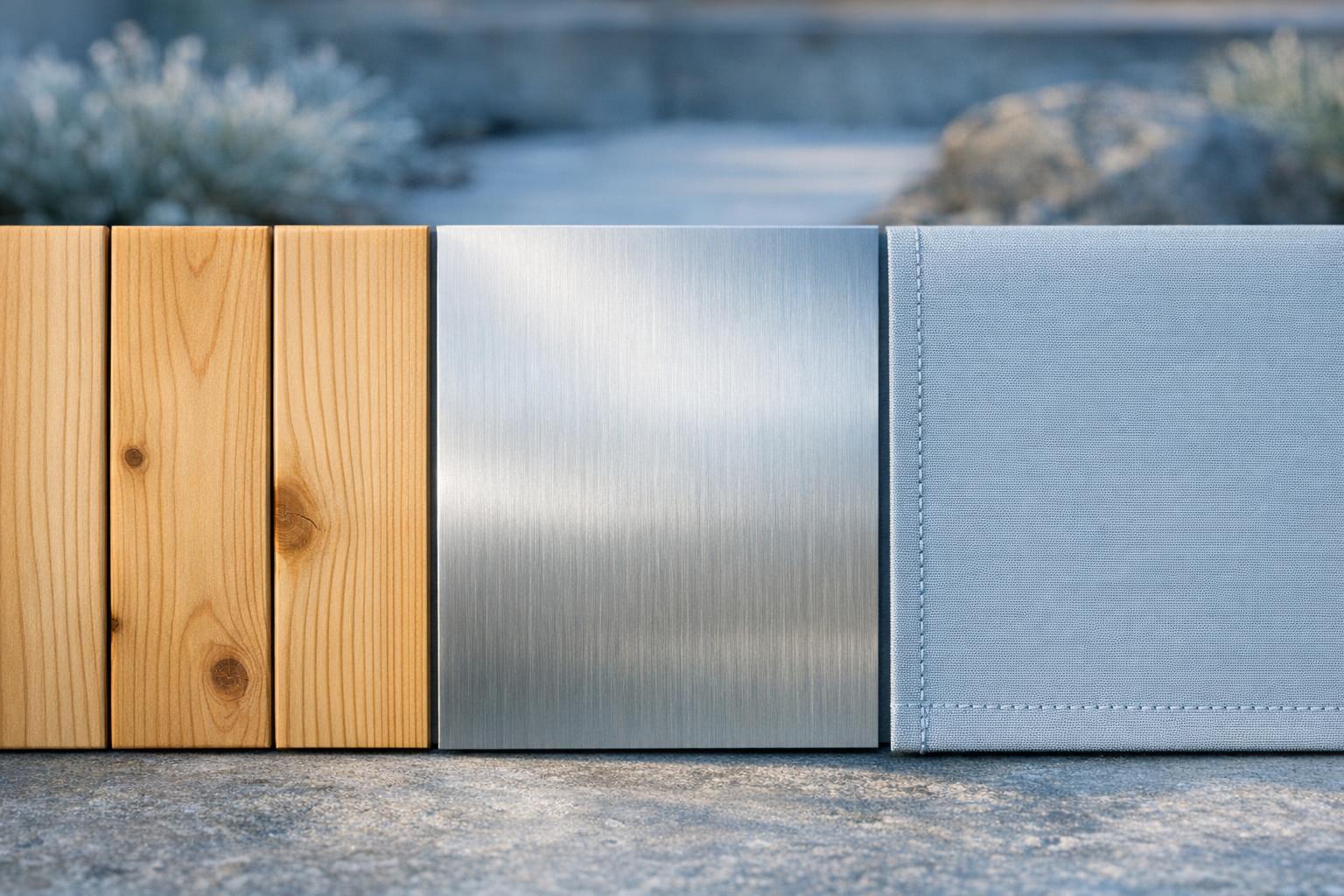
Material names can make cold plunge tubs sound easy to rank, but a label alone rarely describes the whole vessel. The water-contact surface, supporting structure, insulation, external cladding, fittings, and cover may all be different materials. Compare those components separately. The practical buying questions are how the tub is cleaned, supported, connected, repaired, and protected in its intended location, not which finish looks most premium in a photograph.
Ask what actually touches the water
Request the material of the interior surface and any liner, rather than assuming it matches the exterior. A wood-look surround does not establish a wooden water-contact surface, and a metallic appearance does not identify an alloy or coating. Ask whether the stated material covers the complete shell or only a visible panel. Keep the seller's answer tied to the exact model and variation.
Then identify the parts around openings: drain fittings, connection manifolds, gaskets, and fasteners. These can have different cleaning and replacement requirements from the main vessel. If the product description names only the decorative finish, the construction question is still unanswered. A clear component list is more useful than unsupported claims about the inherent superiority of an entire material category.
Evaluate surface care through the manual
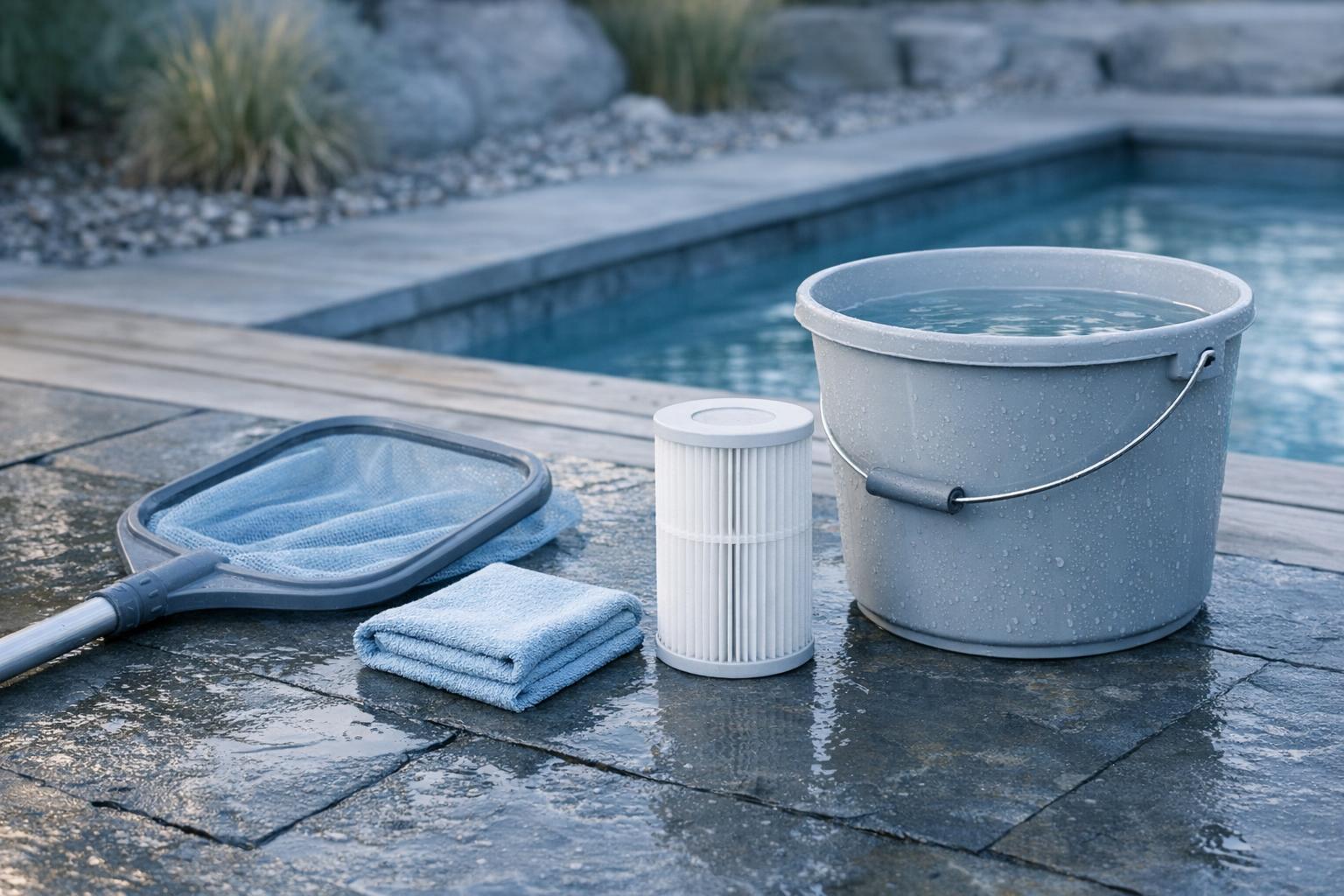
Find the permitted cleaning method before selecting a tub for a permanent installation. Look for instructions covering the interior, exterior, waterline, seals, and lid. Do not infer chemical compatibility from another household object made from an apparently similar material. Surface coatings, adhesives, and elastomers can be part of the assembly even when they are absent from the headline specification.
Plunge's Evolve Standard setup guide specifies a rag or non-abrasive sponge for the initial wipe-down, while its care page separately calls for wiping film at the waterline. These examples show why setup cleaning and routine maintenance should both be checked. They are not permission to use the same cleaner on every tub. The maintenance guide explains how to organize the relevant instructions without inventing a universal chemical recipe. [1] [4]

Separate insulation from appearance
Ask where insulation is present, what the manufacturer documents about it, and whether the cover is included in the claimed construction. A thick-looking wall or timber surround does not prove a particular insulation value. Likewise, a promotional statement about holding temperature needs test conditions before it can support a meaningful comparison. Record missing information rather than converting an attractive finish into a performance score.
Inspect the cover's fit, fastening method, and storage requirements as separate buying features. Ask whether it can be replaced and how it should be cleaned and dried. Do not describe a cover as load-bearing, child-resistant, or a substitute for required barriers unless the relevant documentation explicitly supports that claim. The lid is part of the system, but its appearance does not establish a safety certification or structural rating.
Look closely at connection and repair details
Connection components deserve attention because they may be handled more often than the main shell. Identify replaceable seals, caps, hose collars, and valves. Ask whether replacements are standard documented parts or specific to the maker. A cheap vessel with an unidentifiable drain fitting can become inconvenient when a small component needs replacement, even if the shell remains in good condition.
The Evolve Standard and Pro manuals repeatedly specify seated O-rings, hand-tightened collars, and avoidance of cross-threading. These are useful examples of assembly details that a glossy material description leaves out. They also show why extra force is not a general answer to a reluctant connection. Follow the actual fittings procedure and contact support if parts do not match, rather than modifying a port to make an unsupported assembly fit. [1] [3]
Compare flexible and rigid construction honestly
For inflatable or supported flexible tubs, ask about the supplied pump, structural pieces, inspection routine, permitted repair method, and packing conditions. Plunge's Air manual describes an inflated vessel, whereas its Pop-Up manual describes poles and an inflated top ring. Those are different constructions even though both can be grouped under portable tubs. The category name should not replace the assembly instructions. [5] [6]
Rigid tubs have their own practical questions: delivery access, empty weight, service-panel access, and repair or refinishing arrangements where applicable. Avoid claiming that rigidity guarantees durability or that flexibility guarantees fragility. Neither conclusion follows from the format alone. Our portable versus rigid guide compares the handling and storage routines that are easier to verify than broad lifespan predictions.
Match the construction to the location
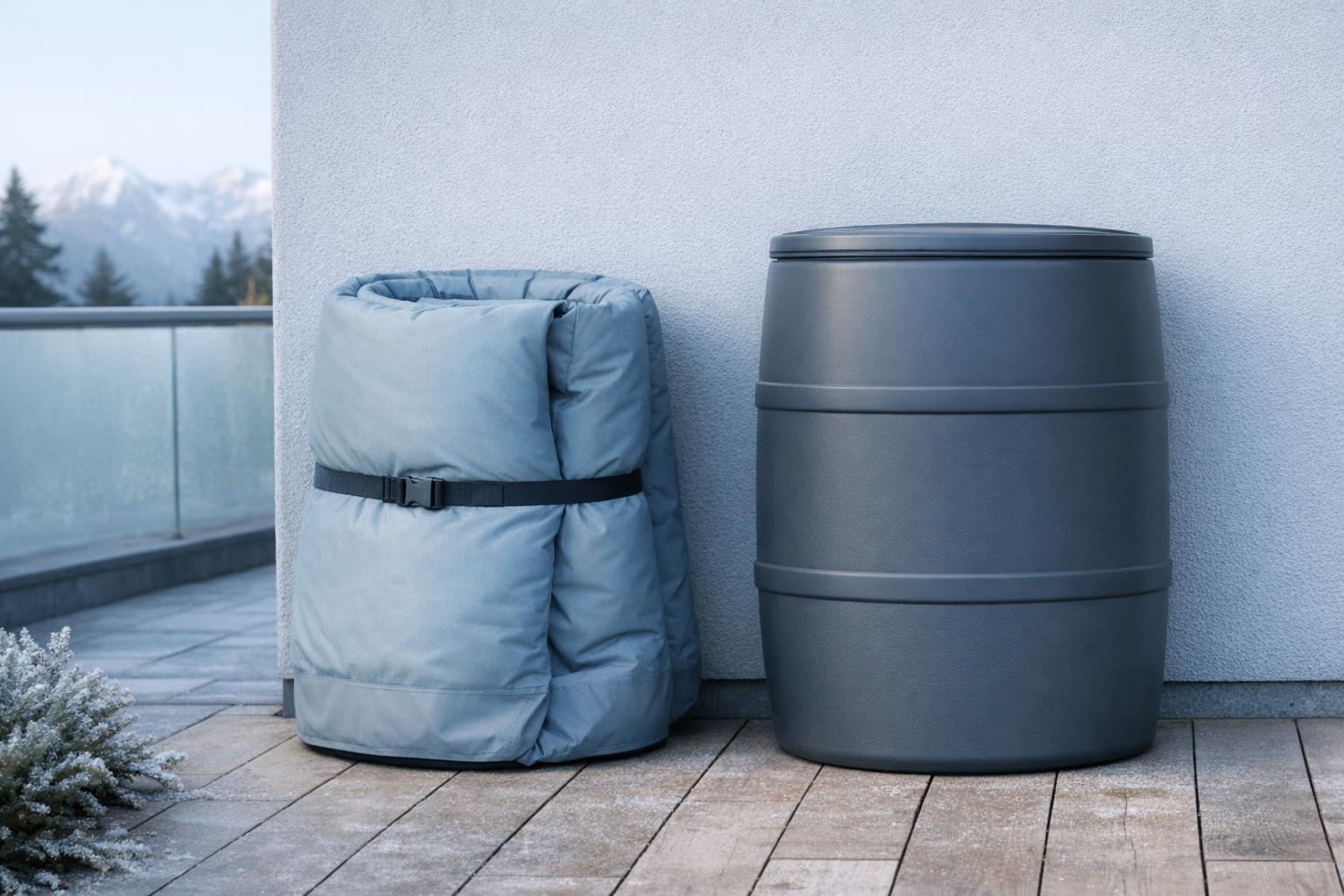
Check the documented exposure limits and storage instructions for the complete product, including its lid and connected equipment. A vessel described for outdoor use does not automatically establish that every bundled electrical component can occupy the same exposed position. Ask how the manufacturer expects the installation to be protected and whether additional covers or seasonal storage are required. Keep ventilation unobstructed when considering any protection for a chiller.
Finish the comparison with a component-level worksheet: interior, support structure, insulation, exterior, drain, connection seals, and cover. Add the cleaning instructions, replaceable part references, and unresolved questions beside each. Return to the main buying checklist after this evidence is collected. A material is a good choice when the complete tub's documented care and installation requirements fit your home, not merely because the material name sounds reassuring.
Sources and further reading
- Manual and Setup Guide for the Plunge Evolve Standard Chiller
Do not use an extension cord with your Evolve Standard Chiller.
- Manual and Setup Guide for the Plunge Evolve Pro Chiller
The chiller needs space to exhaust hot air.
- Caring For Your Plunge Evolve Tub and Standard Chiller
These recommendations are for residential use only.
- Manual and Setup Guide for the Plunge Air Tub
Clear the area where you intend to place the Plunge of debris.
- Manual and Setup Guide for the Plunge Pop-Up Tub
The tub is 34 inches in diameter at the top ring.