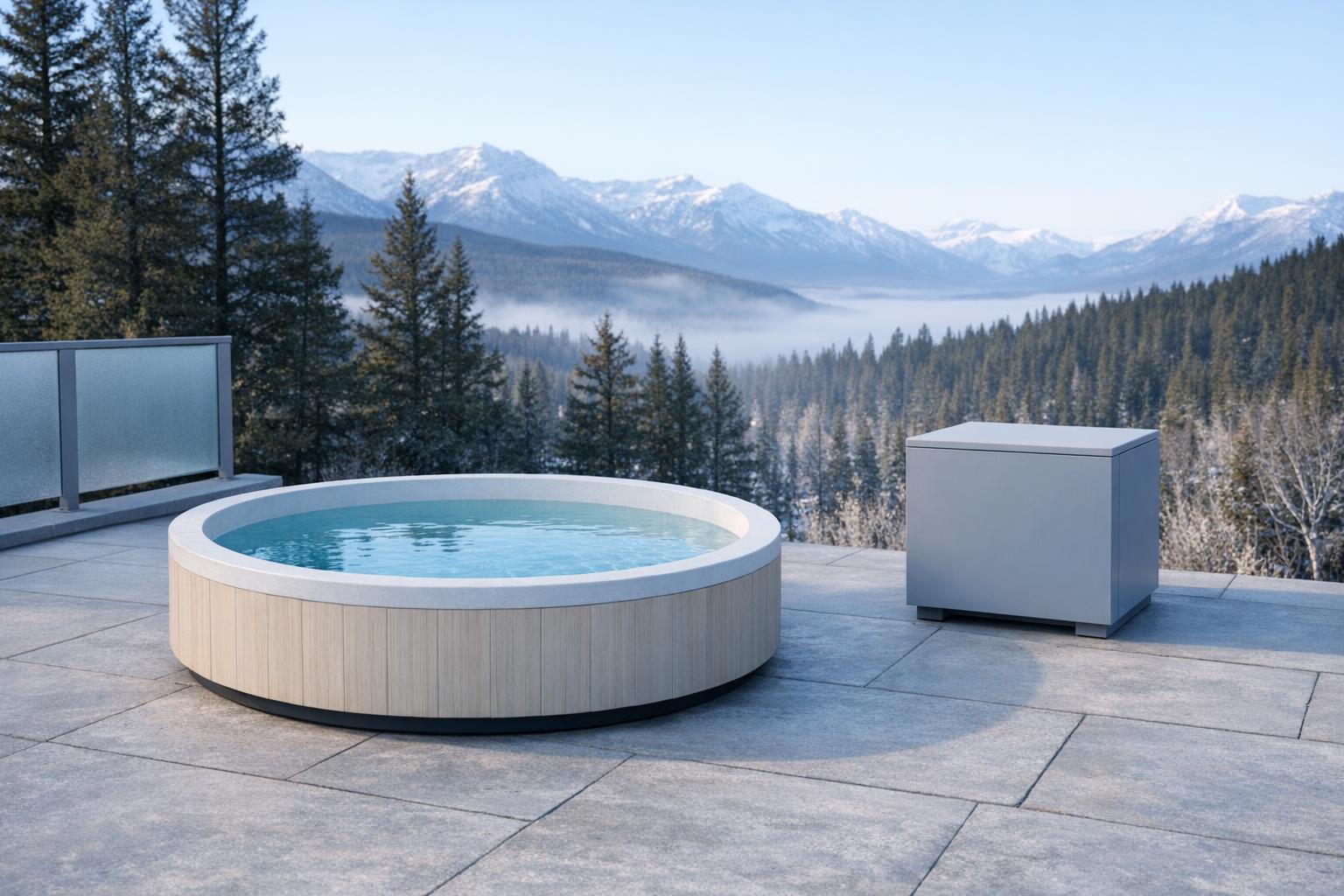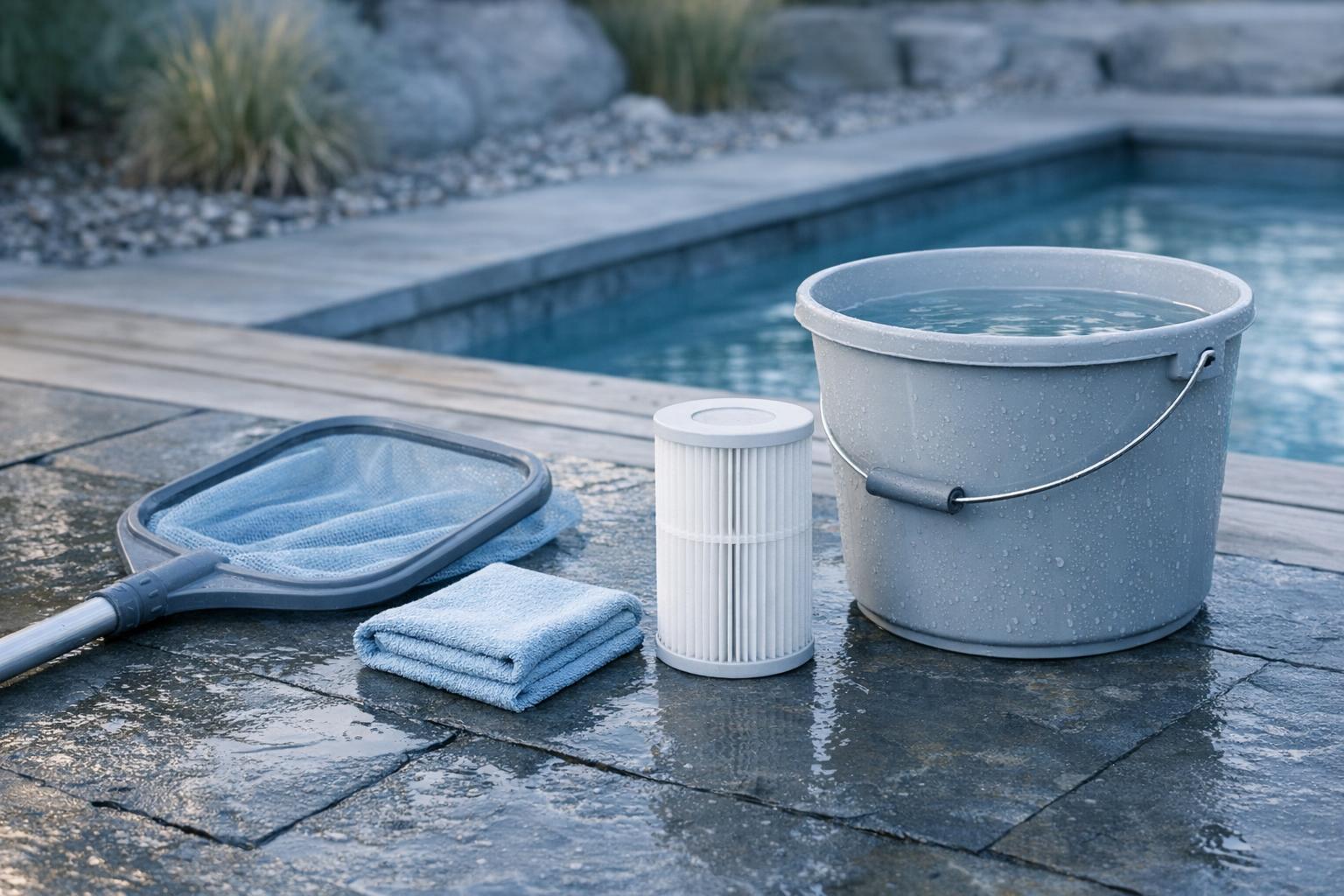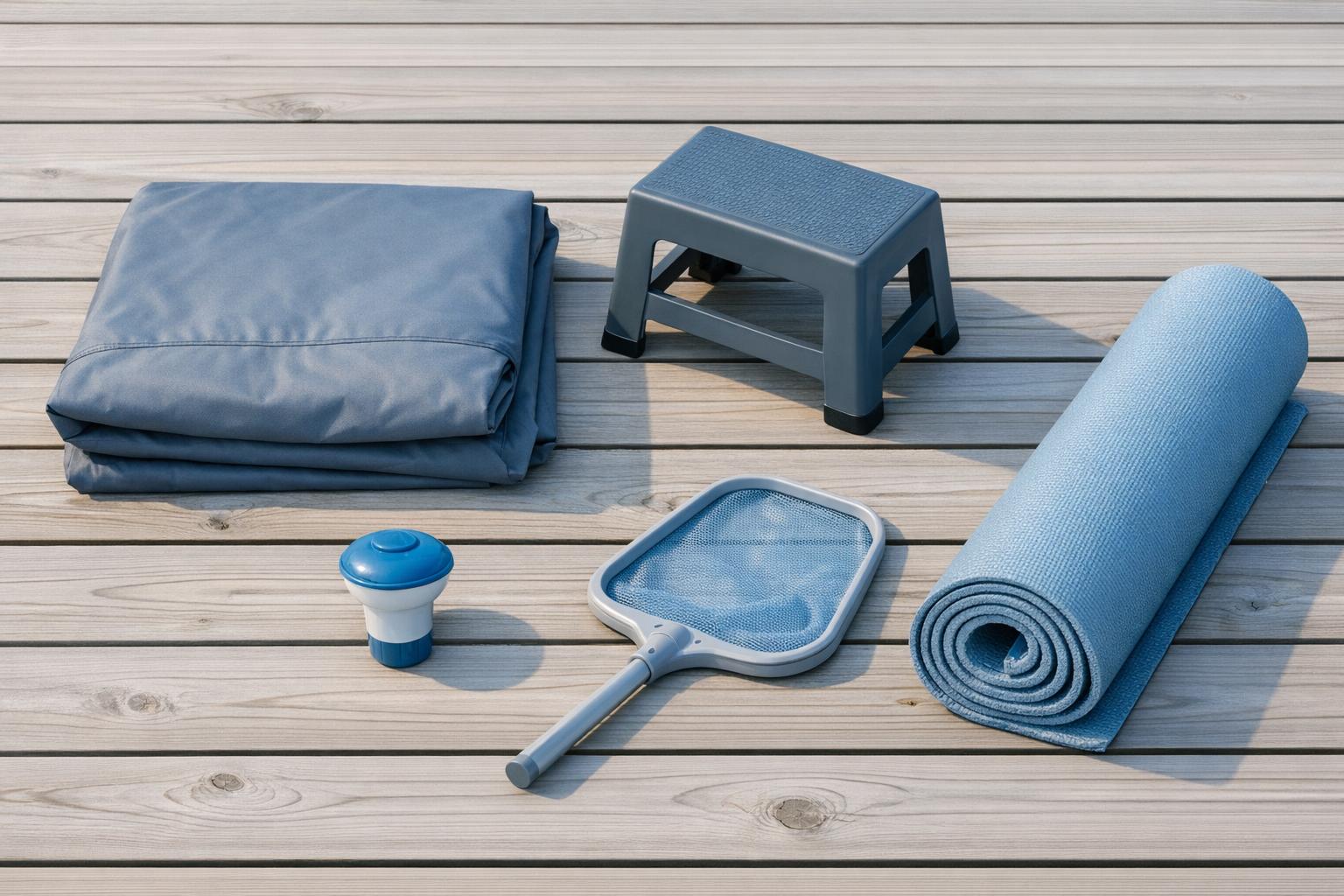
The most useful cold plunge accessories solve a documented installation or maintenance need. Start with the contents of the exact package you intend to buy, then identify the missing items required by its manuals. Avoid building a shopping list from a styled photograph. A lid, filter, hose, or adapter can look appropriate while being the wrong component for your system.
Audit what is already supplied
Create an inventory with columns for included, separately required, optional, and unconfirmed. List the cover, filling accessories, drain fittings, connection hoses, seals, pump, filter, and any tools specified for user assembly. Match each item to the selected model and bundle variation. A seller may offer a tub alone and a complete kit under related product names, so check the actual option in the order.
Use the tub and kit comparison to establish whether powered equipment is included at all. A chiller-ready port does not supply a chiller, and a maintenance starter pack does not necessarily cover later replacement filters. Ask the seller for a written contents list when the description is unclear. That is more reliable than assuming every object visible in a product image will arrive in the box.
Prioritize filling and controlled drainage
Confirm the filling method and any water-supply requirements before buying a hose filter. Plunge's Evolve Standard guide discusses hard water and well water and specifies an ion-exchange filter in its relevant instructions. Do not assume an unrelated filter sold as universal addresses the same requirement. Ask the maker to identify an appropriate component for the documented conditions of your water supply. [1]
For draining, identify the outlet connection and the approved discharge destination before choosing a hose. Measure the route and determine whether gravity drainage is feasible. Avoid unsupported adapters, improvised pumps, and a hose route that blocks essential access. The All-In guide distinguishes the main drain from a separate winterization drain; an accessory suitable for routine emptying may not complete every storage task. Follow the exact procedure rather than assuming one drain attachment solves everything. [2]
Buy connection parts by specification
If the tub and chiller are separate, obtain the supported hose and fitting list for the exact combination. Record connection sizes and part references from documentation, not from visual resemblance. Keep replacement O-rings and caps only when their compatibility is established. A bag of generic fittings is not an installation plan, and an adapter's availability does not prove the assembled system is supported.
Plunge's Evolve Standard and Pro guides both emphasize correctly seated O-rings, hand-tightened collars, and avoiding cross-threading. Those details are a reminder that seal condition and correct assembly matter as much as buying additional hardware. Do not add tape, sealant, clamps, or a tool-tightening step unless the relevant fitting instructions call for it. If supplied parts do not connect smoothly, ask support to resolve the mismatch before filling. [1] [3]
Treat covers and ground protection as distinct items
A cover should match the vessel and have documented fastening, cleaning, and storage instructions. Ask whether it is included and whether replacements are available. Do not assume an insulated-looking lid has a particular performance rating. Equally, do not treat a lid as a load-bearing platform or a substitute for required access controls unless appropriate documentation explicitly establishes those functions. Appearance is not evidence of a certification.
A protective ground layer has a different purpose from a cover. The Plunge Air setup guide describes clearing debris and placing its supplied protective ground cover on a waterproof location. That instruction does not mean any mat can correct a sloping, weak, or water-sensitive base. Check the actual surface and support requirements first. Our materials guide covers the component questions that should precede generic protection purchases. [5]
Build a small, compatible maintenance kit
Identify the correct filter part number and the manual's permitted cleaning supplies. Include a skimmer or other debris-removal tool only where it suits the documented routine. Plunge's Evolve Standard care guide separately lists debris removal, waterline care, hair-catch cleaning, filter replacement, and water chemistry checks. This supports organizing several tasks, not buying a single product advertised as a replacement for them all. [4]
Keep treatment products in their original labeled containers and follow their storage and use instructions. Do not mix systems or copy quantities from another tub. Use the maintenance guide to build a record of tasks and supplies for the actual equipment. A simple log, clearly identified spare filter, and accessible manual can be more useful than a collection of poorly documented upgrades.
Defer extras until the installation is verified
Wait to buy decorative surrounds, equipment boxes, hose extensions, or alternative control devices until their compatibility is confirmed. A surround can obstruct service access, and a box can compromise the chiller's required airflow. The Standard and Pro manuals reject extension cords, so an extension lead should not be treated as a routine accessory for those systems. Electrical changes belong with a qualified electrician. [1] [3]
Finally, review total ownership costs using real quantities and local prices when available: delivered equipment, site preparation, compatible consumables, water handling, and any professionally installed electrical work. Do not publish a precise monthly figure from assumptions that have not been measured or documented. Buy required items first, confirm the system works as instructed, and add only those optional accessories that solve a specific remaining problem without undermining the installation.
Sources and further reading
- Manual and Setup Guide for the Plunge Evolve Standard Chiller
Do not use an extension cord with your Evolve Standard Chiller.
- Manual and Setup Guide for the Residential Plunge All-In
Place the Plunge on a solid, level, waterproof surface.
- Manual and Setup Guide for the Plunge Evolve Pro Chiller
The chiller needs space to exhaust hot air.
- Caring For Your Plunge Evolve Tub and Standard Chiller
These recommendations are for residential use only.
- Manual and Setup Guide for the Plunge Air Tub
Clear the area where you intend to place the Plunge of debris.